
Morning Light: Understanding God's Love in John 3:16-17 and 1 John 4:9-11
A guided Bible study for god's love
A morning audio lesson exploring the depth of God's love as revealed in two key passages. We consider who wrote them, who they were written to, and what modern readers might miss. The aim is to cultivate understanding that leads to practical life in the day ahead.
Scripture references
Good morning. As the day begins, we pause to consider a simple, transformative idea: love that acts. We pull two short passages into the morning rhythm, letting their edges shape the way we walk into the hours ahead.
John the Apostle wrote the first of these in a Gospel that seeks to show who Jesus is and what following him means in real life. The scene behind John 3 is not a sterile debate but a setting in which a religious person, Nicodemus, comes seeking understanding, and the community he’s part of is learning to trust Jesus as the Messiah. In that context, the words you hear coming from the page are meant to reframe motive and method. Consider two brief phrases from the passage: "For God so loved the world, that he gave his only begotten Son" and "For God sent not his Son into the world to condemn the world" but "that the world through him might be saved." Here the emphasis is not punishment but gift, not separation but rescue. The speaker is inviting a human response—trust, belief, and reception of life that comes through Jesus.
To unpack what this means, start with who the term \"world\" points to in this Gospel. It isn’t a geographic map; it’s the human world in need of renewal—people, systems, and patterns that drift away from God. The phrase \"believeth in him\" signals more than head assent; it signals trust that reorients daily life toward Jesus. When John writes about not perishing but having everlasting life, the contrast is not primarily about the afterlife as a distant deadline; it’s about a present reality of life that begins now because God’s action makes belonging possible. A modern reader might read this as a mere theological claim, but the effect is practical: the motive of God’s love moves toward rescue, not rate-setting or exclusion. This is where a morning can start with clarity rather than confusion—the gospel as good news that comes with a new way to live today.
Turning to the second passage, 1 John 4:9–11, the same author writes to a community labeled as the beloved, a group learning to live together under pressure and to discern what love looks like in practice. The phrase \"In this was manifested the love of God toward us\" focuses attention on a concrete demonstration of love—God’s sending of his only begotten Son into the world so that we might live through him. The wording matters here because it ties love to a specific action, not a vague feeling. Then the text sharpens the rhythm: \"Herein is love, not that we loved God, but that he loved us,\" underscoring a radical reversal. Love begins with God’s initiative. Our response is gratitude, trust, and reciprocity that shows itself in real relationships. The next line—\"Beloved, if God so loved us, we ought also to love one another\"—reads as a practical imperative born from the recognition of God’s prior act. The call to love one another is not a suggestion for nicer behavior; it is an expected pattern in a community formed by God’s love. In this light, the verse that follows about Jesus being the propitiation for our sins points to a costly solution to a deep problem: love that addresses the brokenness between humanity and God and among people. If you allow that connection to land, you begin to see why living today with others—especially those different from you—becomes a direct expression of the gospel you claim to believe.
A quiet discovery in these words is the rhythm of initiative. In John 3:16–17, God’s love is not a reactive sentiment but a proactive choice that moves toward the world in need. The contrasts built into the verse—perishing versus everlasting life, condemnation versus salvation—do not just teach about outcomes; they point to God’s character as active, generous, and merciful. In 1 John 4:9–11, the emphasis remains on God’s initiative. The phrase \"In this was manifested the love of God toward us\" anchors love in a historical act, not a feeling that fades with the weather or the mood. When the writer adds, \"Herein is love, not that we loved God, but that he loved us,\" the radical shift is clear: love begins with God’s decision, and our life in response becomes a practical pattern—loving one another in everyday moments. The last line, \"Beloved, if God so loved us, we ought also to love one another,\" makes the spiritual truth visible in everyday acts of mercy, listening, forgiveness, and service.
This morning, take the thread from both passages into today’s routine. God’s love is not a distant slogan but a motive that fuels real action: feeding the hungry, listening to the lonely, welcoming the outsider, and choosing patience with the difficult person in line at the coffee shop. Remember the core phrases that anchor this teaching: \"For God so loved the world, that he gave his only begotten Son,\" and \"For God sent not his Son into the world to condemn the world, but that the world through him might be saved.\" And then the truth that echoes through the second text: \"In this was manifested the love of God toward us,\" that God sent his only begotten Son into the world, \"that we might live through him.\" The call remains simple and robust: the life you begin with as you rise is shaped by love that acts, a love that does not wait for perfect conditions to move toward others. When you look at the world today, measure your next step not by what you deserve but by what love has already accomplished on your behalf.
Finally, carry this into the morning by choosing one concrete act of love today. It could be listening to someone who needs to be heard, offering practical help to a neighbor, or simply extending welcome to someone you might usually overlook. Let the morning bring a clear resolve: you are loved in a way that invites you to love others in tangible, breathable ways. And may that love, active and steady, accompany you through the hours ahead, giving you a gentle strength that doesn’t hurry the day but shapes it with grace. May today begin with that confidence: you are deeply loved, and that love moves you outward toward others.
Up next

God's love
Morning Love: Understanding God's Love from John 3:16-17 and 1 John 4:9-11
A calm, practical morning audio lesson exploring how God's love is shown in action and how that love shapes our day and our relationships, with careful notes for context and meaning.
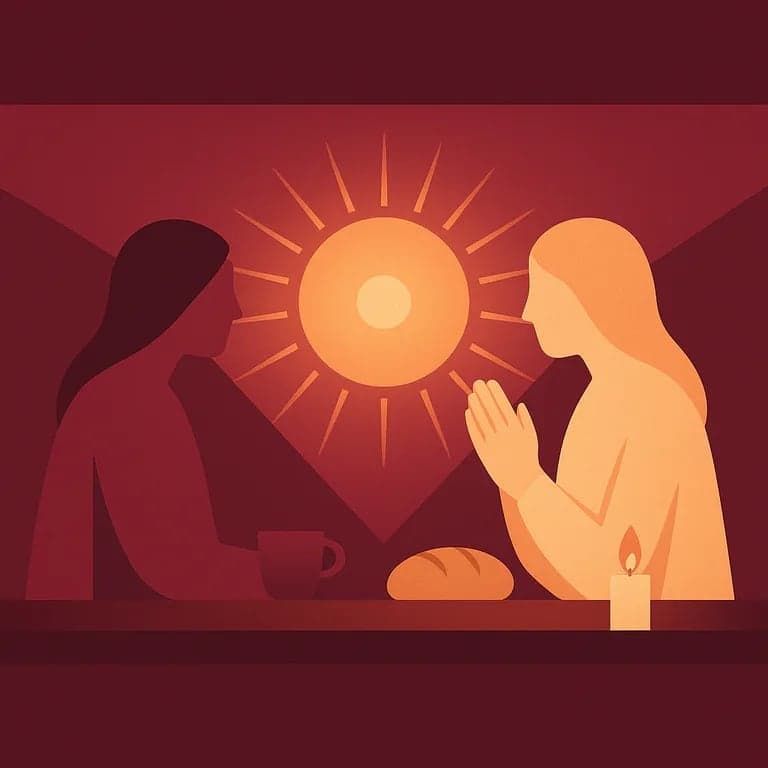
God's love
Morning Reflection: Understanding God's Love
A morning guided Bible lesson focused on understanding God's love through John 3:16-17 and 1 John 4:9-11, with practical steps for living out love today.

God's love
Morning Light: Understanding God's Love
A calm, morning-guided audio lesson exploring God's love as revealed in John 3:16-17 and 1 John 4:9-11, and practical ways to carry that understanding into the day.